


Jaun Elia's 'Umr Guzregi Imtihan Mein Kya': Meaning, Glossary & A Modern Tribute
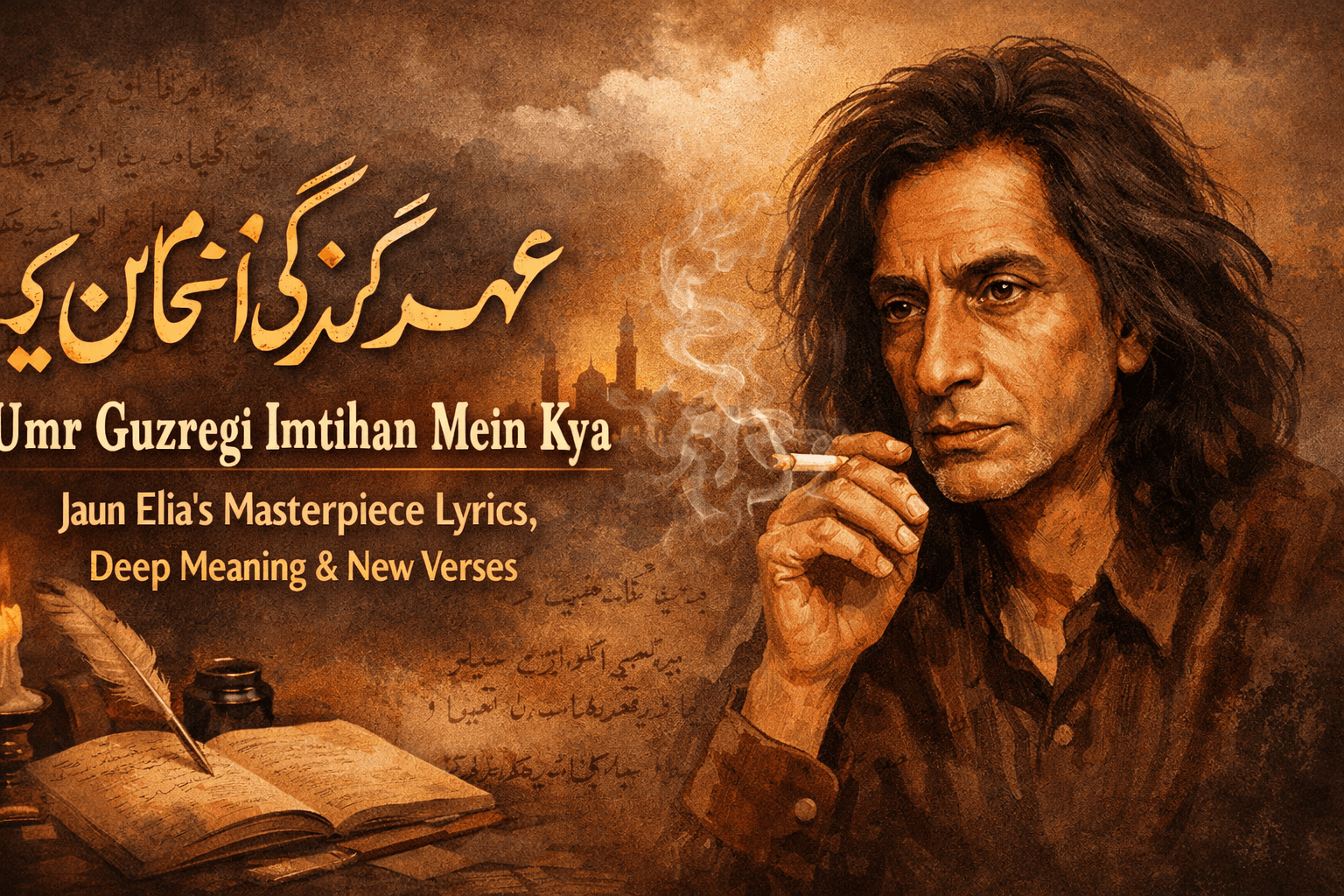
Umr Guzregi Imtihan Mein Kya, Daagh Hi Denge Mujh Ko Daan Mein Kya: Jaun Elia's Masterpiece Lyrics, Deep Meaning & New Verses
There are poets who write about love, and then there is Jaun Elia, who writes about the raw, unfiltered, and often cynical reality of human existence, heartbreak, and alienation. A maestro of Urdu poetry, Jaun Elia possessed a unique, conversational style of writing that felt less like traditional poetry and more like a direct, intense dialogue with the reader—or perhaps with himself.
Today, his words resonate profoundly with the modern generation. His unapologetic vulnerability, existential questioning, and themes of isolation echo the complexities of contemporary relationships and mental health. Among his vast ocean of brilliant work, the ghazal "Umr Guzregi Imtihan Mein Kya" stands out as a masterpiece of profound melancholy and questioning.
Let’s dive deep into the beautiful lyrics, unpack the heavy meaning behind the verses, and explore a modern tribute inspired by his timeless emotions.
The Masterpiece: Original Hindi Lyrics
उम्र गुज़रेगी इम्तिहान में क्या
दाग़ ही देंगे मुझ को दान में क्यामेरी हर बात बे-असर ही रही
नुक़्स है कुछ मिरे बयान में क्यामुझ को तो कोई टोकता भी नहीं
यही होता है ख़ानदान में क्याअपनी महरूमियाँ छुपाते हैं
हम ग़रीबों की आन-बान में क्याख़ुद को जाना जुदा ज़माने से
आ गया था मिरे गुमान में क्याशाम ही से दुकान-ए-दीद है बंद
नहीं नुक़सान तक दुकान में क्याऐ मिरे सुब्ह-ओ-शाम-ए-दिल की शफ़क़
तू नहाती है अब भी बान में क्याबोलते क्यूँ नहीं मिरे हक़ में
आबले पड़ गए ज़बान में क्याख़ामुशी कह रही है कान में क्या
आ रहा है मिरे गुमान में क्यादिल कि आते हैं जिस को ध्यान बहुत
ख़ुद भी आता है अपने ध्यान में क्यावो मिले तो ये पूछना है मुझे
अब भी हूँ मैं तिरी अमान में क्यायूँ जो तकता है आसमान को तू
कोई रहता है आसमान में क्याहै नसीम-ए-बहार गर्द-आलूद
ख़ाक उड़ती है उस मकान में क्याये मुझे चैन क्यूँ नहीं पड़ता
एक ही शख़्स था जहान में क्या
Unpacking the Deep Meaning
Jaun Elia’s ghazal is structured as a series of rhetorical questions, each heavier than the last. He dissects life, family, self-worth, and unrequited love with surgical precision. Here is a breakdown of its core themes:
-
The Endless Trial of Life: (उम्र गुज़रेगी इम्तिहान में क्या / दाग़ ही देंगे मुझ को दान में क्या) The opening sets a tone of exhaustion. He questions if his entire existence will merely be a series of tests, and if the only reward he will ever receive from the world is scars and blemishes on his character.
-
The Tragedy of Being Unheard: (मेरी हर बात बे-असर ही रही / नुक़्स है कुछ मिरे बयान में क्या) A highly relatable modern sentiment—the feeling of shouting into the void. He wonders if his words lack power, or if there is a fundamental flaw in how he expresses himself, as nothing he says seems to leave an impact.
-
Alienation Amidst Family: (मुझ को तो कोई टोकता भी नहीं / यही होता है ख़ानदान में क्या) This is perhaps one of the most heartbreaking couplets. True alienation isn't about being alone; it's about being surrounded by your own people and realizing they don't even care enough to interrupt, scold, or guide you anymore. It represents complete emotional detachment.
-
The "Main Character" Illusion Shattered: (ख़ुद को जाना जुदा ज़माने से / आ गया था मिरे गुमान में क्या) Jaun brutally calls out his own arrogance. He mocks the youthful illusion of feeling "different from the rest of the world," realizing it was nothing but his own misplaced pride.
-
The Ultimate Climax of Heartbreak: (ये मुझे चैन क्यूँ नहीं पड़ता / एक ही शख़्स था जहान में क्या) The concluding couplet (Maqta) is legendary. It captures the universal frustration of not being able to move on. Despite logic, despite knowing there is a vast world out there, the heart remains painfully anchored to just one person.
A Modern Tribute: New Verses Inspired by Jaun
Great art inspires new art. Taking the core emotions of Jaun's ghazal—the feeling of isolation, the faked smiles, and the inescapable memory of that one person—here is a fresh, modern take.
Written in a classic, flowing meter, these new verses serve as an homage to the timeless melancholy Jaun Elia captured, tailored for the silent battles of today's generation.
The New Ghazal:
ख़्वाब सारे राख हैं अब, इक फ़साना और क्या?
हँस रहे हैं महफ़िलों में, इक बहाना और क्या?सब पराये हो गए हैं, इस अकेले शहर में
बस तुम्हारी आरज़ू है, ये ज़माना और क्या?चीख़ता हूँ, लौट आती हैं, मेरी ही आवाज़ें
हाल-ए-दिल अब, किस बशर को, है सुनाना, और क्या?दुनिया से हूँ, मैं जुदा सा, बस यही था, इक गुमान
ख़ुद को ही हम, कर रहे हैं, अब दीवाना, और क्या?रात दिन इस, ज़िन्दगी की, उलझनों में, क्या रखा
रस्म जीने, की हमें है, अब निभाना, और क्या?
Jaun Elia wasn't just a poet; he was a mirror reflecting the deepest, darkest corners of the human heart. Whether you are reading him in a quiet room or applying his verses to the chaos of modern dating and daily hustles, his question remains universally resonant: "एक ही शख़्स था जहान में क्या?"
